
Vice Verse: The Quiet Connector in Hip-Hop History
By Hansel Fritzgerald · 2026-07-20
From Jackson State’s early hip-hop movement to the Slum Village and J Dilla family tree, Kevin “Vice Verse” Perkins has built a career rooted in lyricism...
Vice Verse: The Quiet Connector in Hip-Hop History
From Jackson State’s early hip-hop movement to the Slum Village and J Dilla family tree, Kevin “Vice Verse” Perkins has built a career rooted in lyricism, relationships and longevity.
Some artists build their careers by constantly demanding the spotlight. Others become part of the foundation—the respected voices and collaborators whose work connects important movements behind the scenes.
Kevin Perkins, professionally known as Vice Verse, is one of those artists.
The Chicago emcee and songwriter has created a career that reaches across several influential chapters of independent hip-hop. His journey connects Chicago’s underground scene, the early rap community surrounding Jackson State University, David Banner’s formative creative circle, Slum Village and projects connected to the legacy of J Dilla.
Vice Verse has been affiliated with collectives including Stewpot Stowaways, The Unkz, Jrunk Unklz, Dirty Slums and The Dream Team. Rather than being defined by one crew, album or city, his career demonstrates how authentic hip-hop communities are built through lasting relationships.
The Jackson State Foundation
A major part of the Vice Verse story began at Jackson State University in Mississippi.
Vice Verse was connected to Stewpot Stowaways, an early hip-hop collective that included artists such as David Banner, Kamikaze, Olskool Ice-Gre and cap D. The group emerged during a period when Mississippi’s hip-hop infrastructure was still developing and artists often had to build their own performance spaces, networks and creative opportunities.
That history places Vice Verse inside the early community that helped shape David Banner before Banner became a nationally recognized rapper, producer and activist.
It also explains why Vice Verse’s music has never sounded limited to one region. His Chicago roots gave him lyrical sharpness, while his Mississippi connections placed him inside a Southern movement built around storytelling, competition and independence.
He was not simply observing that history. He was contributing to it.
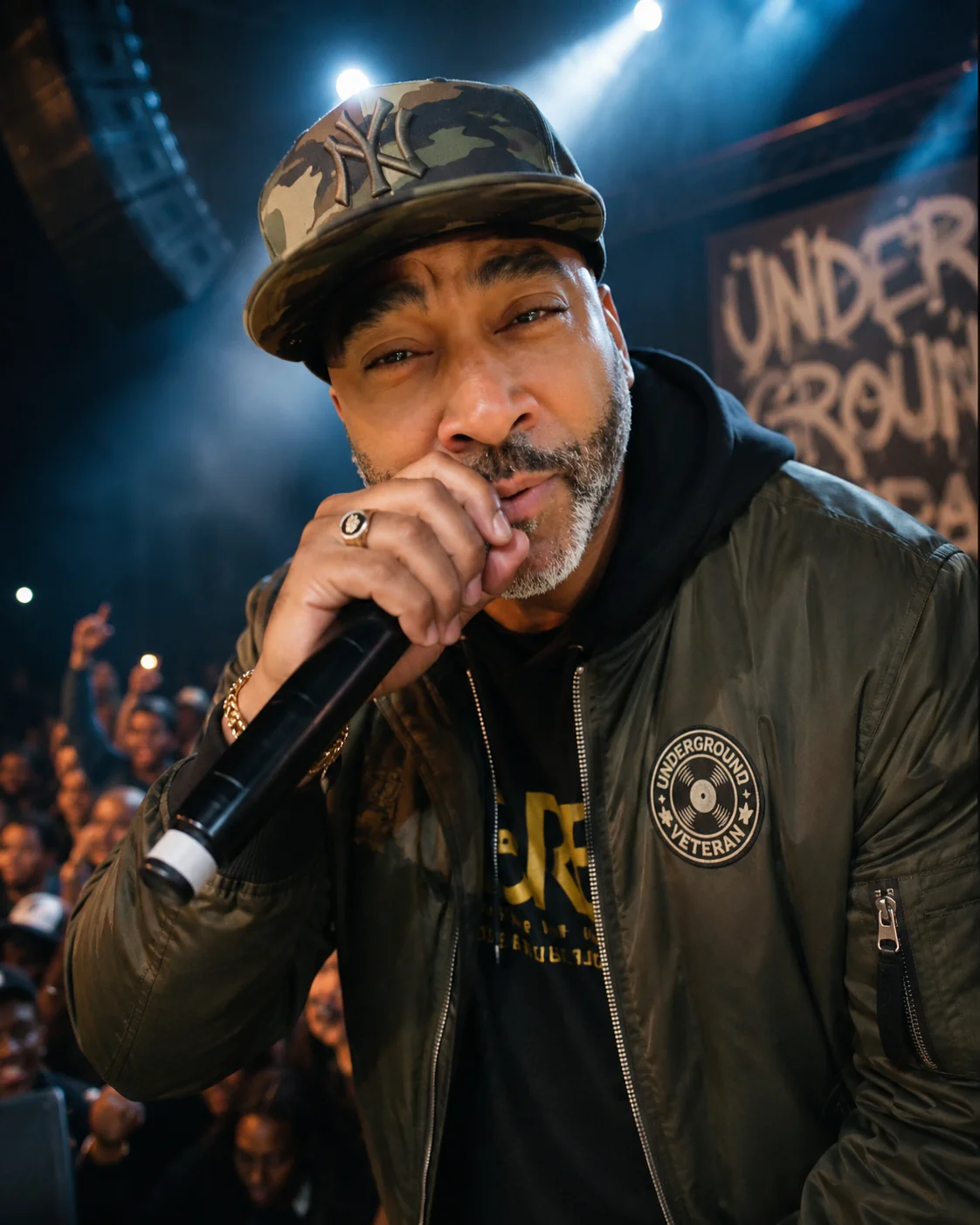
Entering the Slum Village Family Tree
Vice Verse’s career later developed a strong connection to Detroit through Slum Village.
He appeared on “Scheming” from Slum Village’s 2010 album Villa Manifesto. The track placed him alongside Phife Dawg of A Tribe Called Quest and Posdnuos of De La Soul—three respected lyrical traditions meeting on one record.
Vice Verse returned on Slum Village’s 2013 album Evolution, appearing on “Hustle” with Chicago poet and emcee J. Ivy, as well as “1 Nite.”
His relationship with T3 of Slum Village also extended into T3’s 3illa Madness project, where Vice Verse appeared on “Boomerang” and a remix of “Give Me a Beat.”
Another significant credit came through “Fisherman” from the Yancey Boys album Sunset Blvd. The project was built around previously unreleased production from J Dilla, connecting Vice Verse directly to one of the most important creative legacies in hip-hop.
These were not random guest appearances.
Repeated invitations into the Slum Village and J Dilla creative circle showed that Vice Verse could be trusted to enter an established musical environment without losing his own identity—or weakening the identity of the project.
In independent hip-hop, that kind of trust is an achievement of its own.
Building an Independent Catalog
Vice Verse’s affiliations are important, but his solo catalog shows an artist capable of standing on his own.
His 2019 album Smoke&Mirrors was recorded between Chicago and Jackson, Mississippi—the two cities most central to his artistic development. The project included songs such as “Much 2 Much,” “B-Boy Lazarus,” “Magnum Opus,” “The Brakes” and “Rumble.”
The album explored the difference between image and reality, a theme that fits Vice Verse’s position in the music industry. His lyrics frequently examine survival, spirituality, ambition, media influence and the pressure to appear successful.
In 2020, he released V3, a five-track project produced entirely by T3 of Slum Village. The collaboration included “Clear My Throat,” “Breakitdown,” “Shadow Boxin’,” “Aziz” and “Cause We.”
Rather than treating their earlier work as a one-time connection, V3 gave Vice Verse and T3 room to develop a complete musical statement together.
Vice Verse followed that release with Life Lines in December 2023. Recorded in Chicago at The Ear Conservatory, the album brought together producers and emcees from his extended creative network.
Guest appearances included Rashid Hadee, Philmore Green, Coke Bumaye, Lid Law, MC JUICE, Antwone Muhammed and Bob Chin. Production came from T3, Tony Baines, Tye Hill, Trayzbeatz, Produktionix, Awdazcate, SC and Beats by JT.
Life Lines feels less like a collection of industry features and more like a map of authentic relationships. Every contributor fits within Vice Verse’s lyrical, independent and community-centered approach.
The Power of Longevity
Vice Verse’s publicly documented catalog stretches across more than two decades.
His recording credits include early appearances such as “Can’t Relate,” “Amazing Pt 2,” “Yes Lord,” “Stuck” and “They Love Me.”
His continued activity matters because longevity alone does not guarantee relevance. Vice Verse has remained connected to credible music, respected collaborators and the culture that helped shape him.
He has operated as an emcee, songwriter, crew member, independent artist and cultural witness. His career connects scenes that are often discussed separately:
Chicago. Jackson. Detroit. Slum Village. David Banner. J Dilla. Independent hip-hop.
Vice Verse stands at the intersection of all of them.
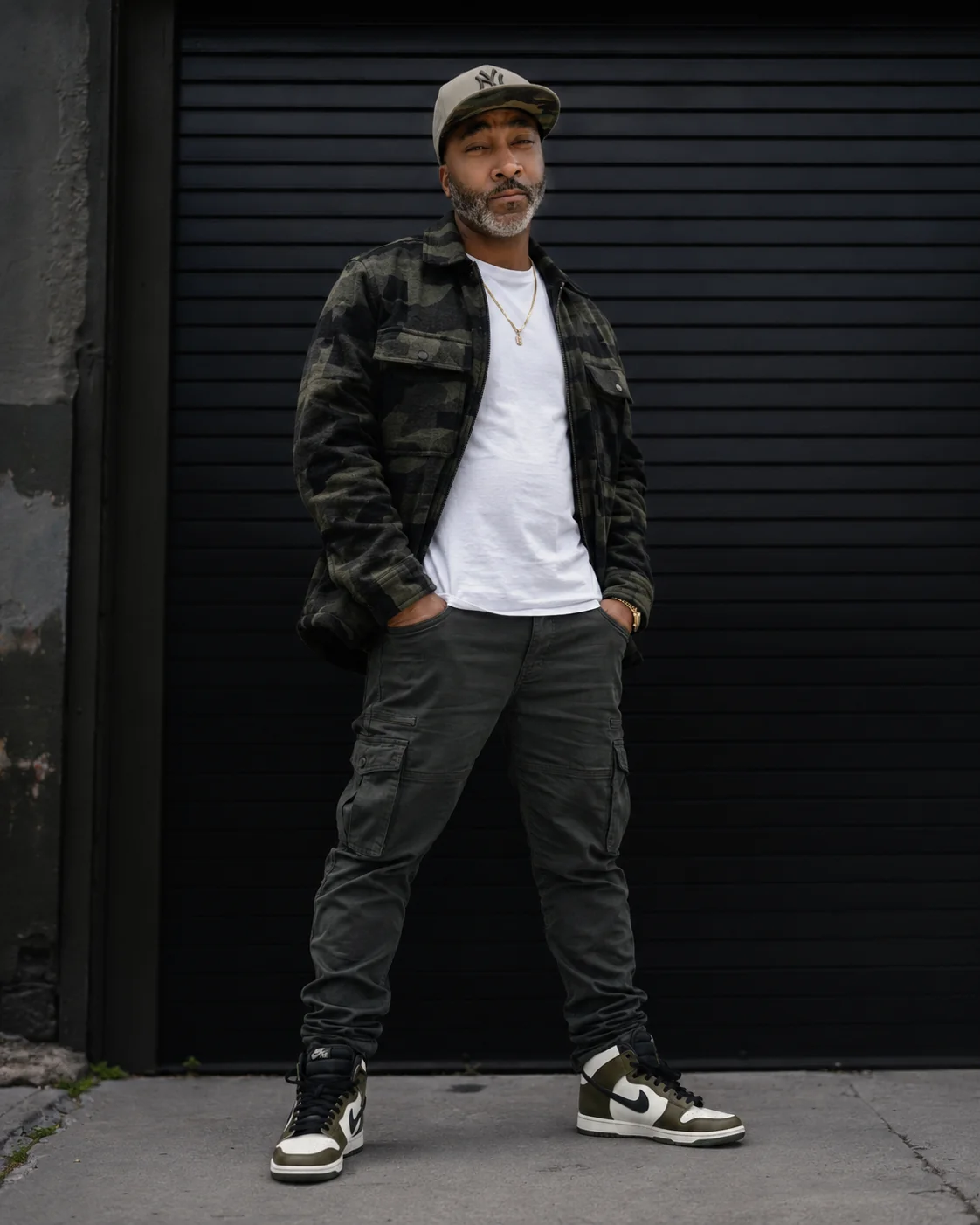
More Than a Supporting Character
Hip-hop history is often rewritten around whichever artist became the most famous. That leaves out the collaborators, organizers and connectors who helped create the environments where major artists developed.
Vice Verse’s story challenges that version of history.
His journey through Stewpot Stowaways, The Unkz and the extended Slum Village family shows the importance of collective work. Movements are rarely created by one artist alone. They require emcees, producers, DJs, promoters, activists and trusted collaborators who keep the culture moving.
Vice Verse has served in several of those roles.
He has preserved the importance of lyricism without turning hip-hop into a museum piece. He respects his history without depending entirely on nostalgia. Most importantly, he continues to release music and participate in the culture instead of simply talking about what happened years ago.
The Final Verse
Kevin “Vice Verse” Perkins may not have pursued the loudest form of fame, but his résumé speaks clearly.
He was part of a pioneering Jackson State hip-hop community that included David Banner. He formed lasting creative relationships with Slum Village and T3. He contributed to projects carrying the musical legacy of J Dilla. He built an independent catalog between Chicago and Jackson and continued releasing music well into the 2020s.
Taken separately, each accomplishment is noteworthy.
Taken together, they reveal Vice Verse as one of hip-hop’s quiet connectors—an artist whose career links regions, generations and movements that helped keep independent rap alive.
For listeners discovering him today, his catalog offers more than music.
It offers a path through hip-hop history, guided by an emcee who was not standing on the sidelines.
He was in the room, contributing verses.
Follow Vice Verse
Stay connected for new music, performances, archival material and independent hip-hop updates.
Instagram: @viceverseyadig
Facebook: Vice Verse
X: @ViceVerse
Listen to the Music
Spotify: Vice Verse on Spotify
Apple Music: Vice Verse on Apple Music
Bandcamp: Official Vice Verse Discography
Featured Projects
BTS Music Group encourages readers to explore the catalog, follow the journey and support the artists who helped build the culture.