The AI Music Fight Isn’t Just About Songs Anymore — It’s About the Artist
By Maya Sinclair · 2026-09-09
The legal battle surrounding AI music is expanding beyond copyrighted songs as musicians question whether artificial intelligence should be allowed to imitate an artist’s voice, likeness and identity.
The legal battle surrounding artificial intelligence and music is entering territory that may be even more complicated than copyright.
For several years, the central question has been whether AI companies should be allowed to train their models using copyrighted recordings and compositions without permission. Record labels, publishers, songwriters and technology companies have spent enormous amounts of time arguing over what constitutes infringement, fair use and licensing.
Now another question is becoming impossible to ignore.
What happens when artificial intelligence doesn't simply learn from an artist's music but begins recreating characteristics associated with the artist?
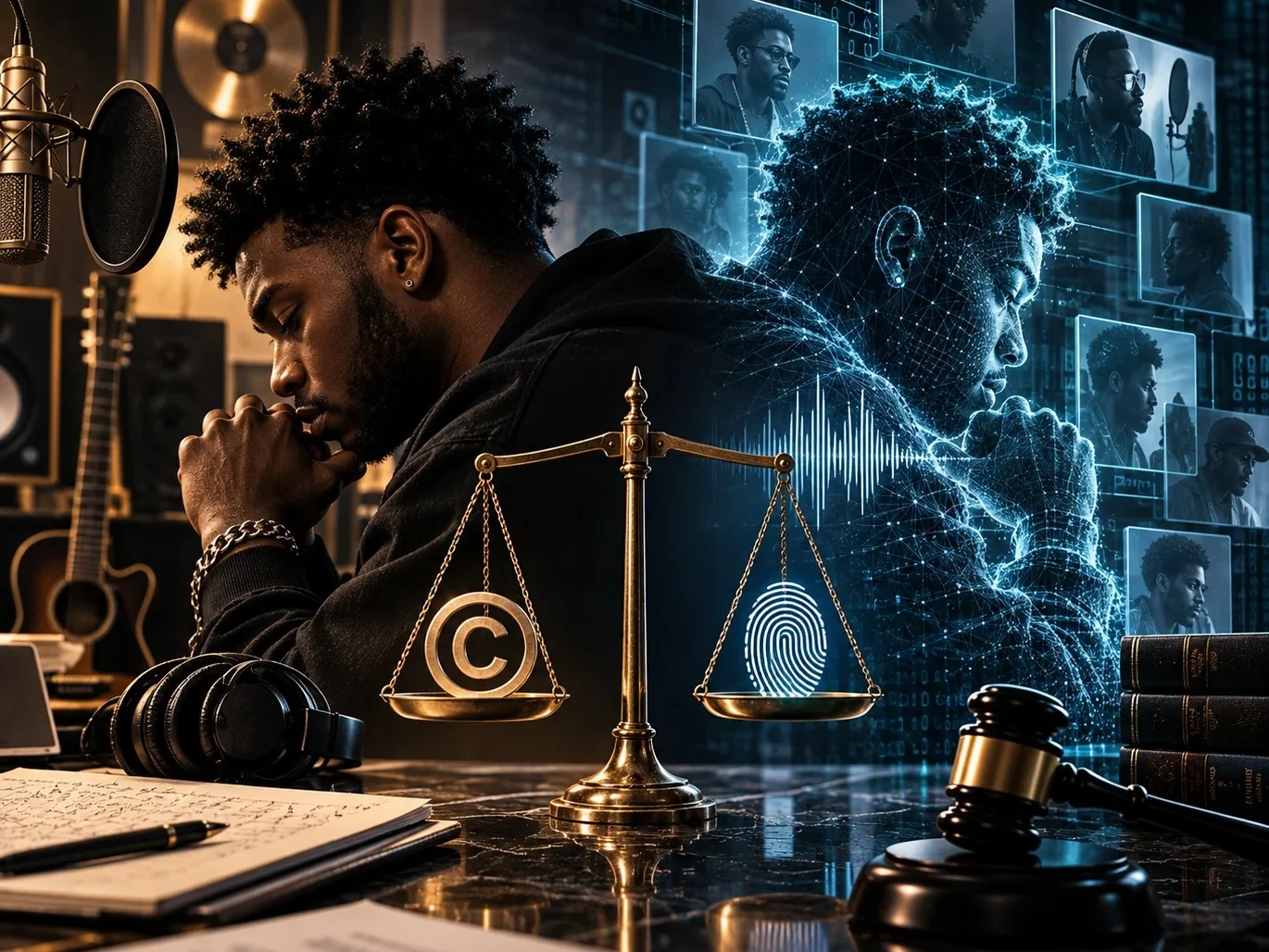
Recent legal action involving musicians and AI music company Suno has placed greater attention on an artist's name, likeness, voice and identity. That distinction matters because ownership of a copyright and ownership of a person's identity are not necessarily the same thing.
An artist might not own every master recording in their catalog. A songwriter may share ownership of a composition with several publishers. But the artist's name, image and recognizable identity create another set of legal and ethical questions.
AI makes those questions much harder.
Music has always involved influence. Singers learn techniques by listening to other singers. Producers study other producers. Rappers absorb flows, rhyme structures and delivery styles from previous generations. Influence is one of the ways art evolves.
Artificial intelligence changes the scale and speed of that process.
A generative system can potentially analyze enormous amounts of music and produce something that resembles familiar elements within seconds. As those systems improve, the line between inspiration and imitation could become increasingly difficult to define.
That should matter to independent artists just as much as it matters to superstars.
Voice-cloning technology is becoming more accessible. Image-generation tools can reproduce recognizable faces. AI-generated songs can be created around fictional personalities, existing celebrities or voices that sound remarkably similar to known performers.
That means artists need to start thinking about their identity as intellectual property too.
Your songs have value.
Your masters have value.
Your publishing has value.
But your voice, likeness, name and reputation may also have commercial value.
The music business spent decades building systems around copyrights. Artificial intelligence may force the industry to build stronger systems around identity.
AI itself isn't automatically the enemy. It can be a powerful creative tool, and artists are already using it for production, brainstorming, visuals, marketing and experimentation.
The issue is consent.
There is a major difference between using AI to explore a creative idea and using technology to make audiences believe a particular human artist created or performed something they never touched.
The first major AI music battle asked who owns the song.
The next battle may ask who owns the artist.
The industry does not have all the answers yet.
That is exactly why artists should be paying attention now.
Maya Sinclair
BTS Music Group — We Don't Follow the Map. We Change the Whole Route.